
.svg)
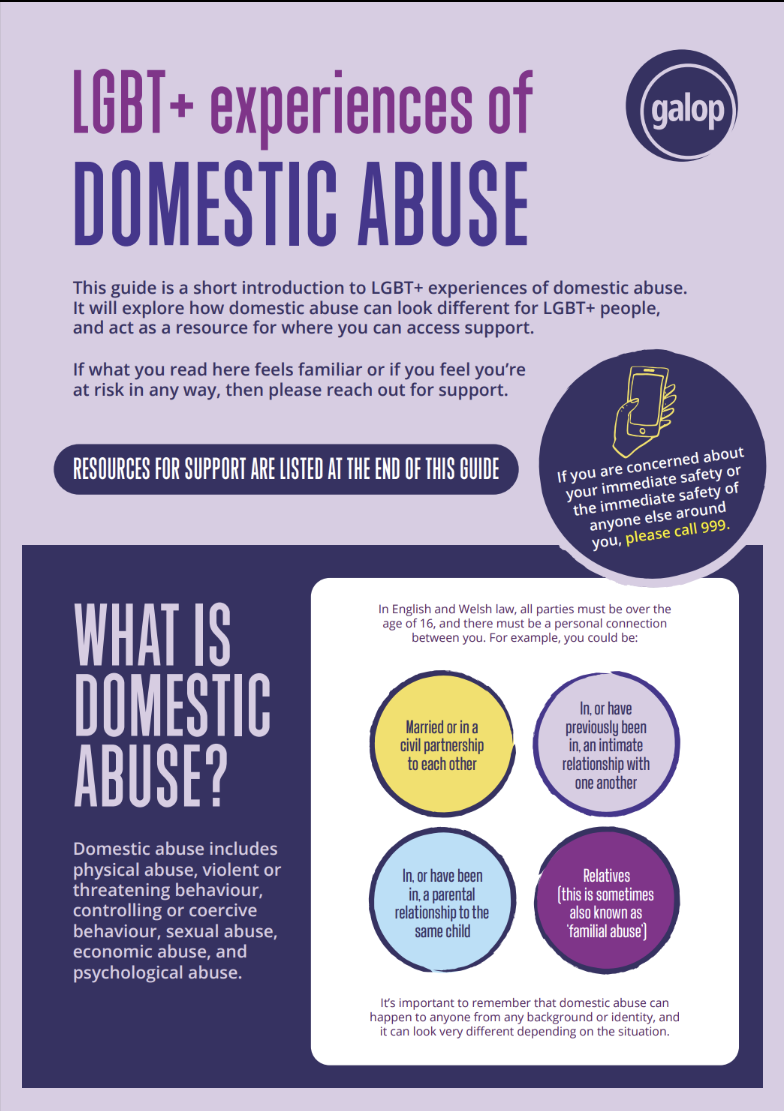
This guide is a short introduction to LGBT+ experiences of domestic abuse. It will explore how domestic abuse can look different for LGBT+ people, and act as a resource for where you can access support. If what you read here feels familiar or if you feel you're at risk in any way, then please reach out for support.
RESOURCES FOR SUPPORT ARE LISTED AT THE END OF THIS GUIDE
<start>
Domestic abuse includes physical abuse, violent or threatening behaviour, controlling or coercive behaviour, sexual abuse, economic abuse, and psychological abuse.
In English and Welsh law, all parties must be over the age of 16, and there must be a personal connection between you. For example, you could be:
It's important to remember that domestic abuse can happen to anyone from any background or identity, and it can look very different depending on the situation.
If you are concerned about your immediate safety or the immediate safety of anyone else around you, please call 999.
<end>
<start>
It's also important to understand that LGBT+ experiences of domestic abuse are not regularly talked about or taught, so it can be difficult to know if it's something that you're experiencing.
Domestic abuse for LGBT+ victims and survivors can look exactly like it does for cisgender, heterosexual victims and survivors. However, LGBT+ people can experience types of domestic abuse that specifically target their LGBT+ identity. Some examples of this are:
This is just a short guide on LGBT+ experiences of domestic abuse. If you are concerned about your safety or the safety of anyone else, please reach out for support. There are services available that want to help. And remember, you can reach out even if you're unsure whether what you experienced was domestic abuse.
If you're a professional wanting to learn more about LGBT+ experiences of domestic abuse, please contact training@galop.org.uk
LGBT+ PEOPLE CAN AND DO EXPERIENCE DOMESTIC ABUSE. YOUR EXPERIENCES ARE REAL AND VALID.
<end>
<start>
If you have any concerns about your safety or the safety of anyone around you, it's important to know you're not alone. Here are some of the ways you can reach out for support:
<end>
Lesbian, Gay and Bisexual Anti-Violence and Policing Group, operating as Galop, is a charity registered in England and Wales under number 1077384, whose registered office is PO Box 81790, London, EC3P 3GA. Galop is a company limited by guarantee, registered in England and Wales under number 2969307.

Want to hear from us about how we support LGBT+ people?
Subscribe to our mailing list


.svg)


